
PlanetsideMarkets
The planet that prices its own scarcity twice
Two oil markets, barrels and promises, are telling different stories. The numbers are sourced; the open questions are labelled.
3 min readNullMeridian
Not investment advice. Figures come from the primary sources listed below. Forward-looking claims are labelled Hypothesis.
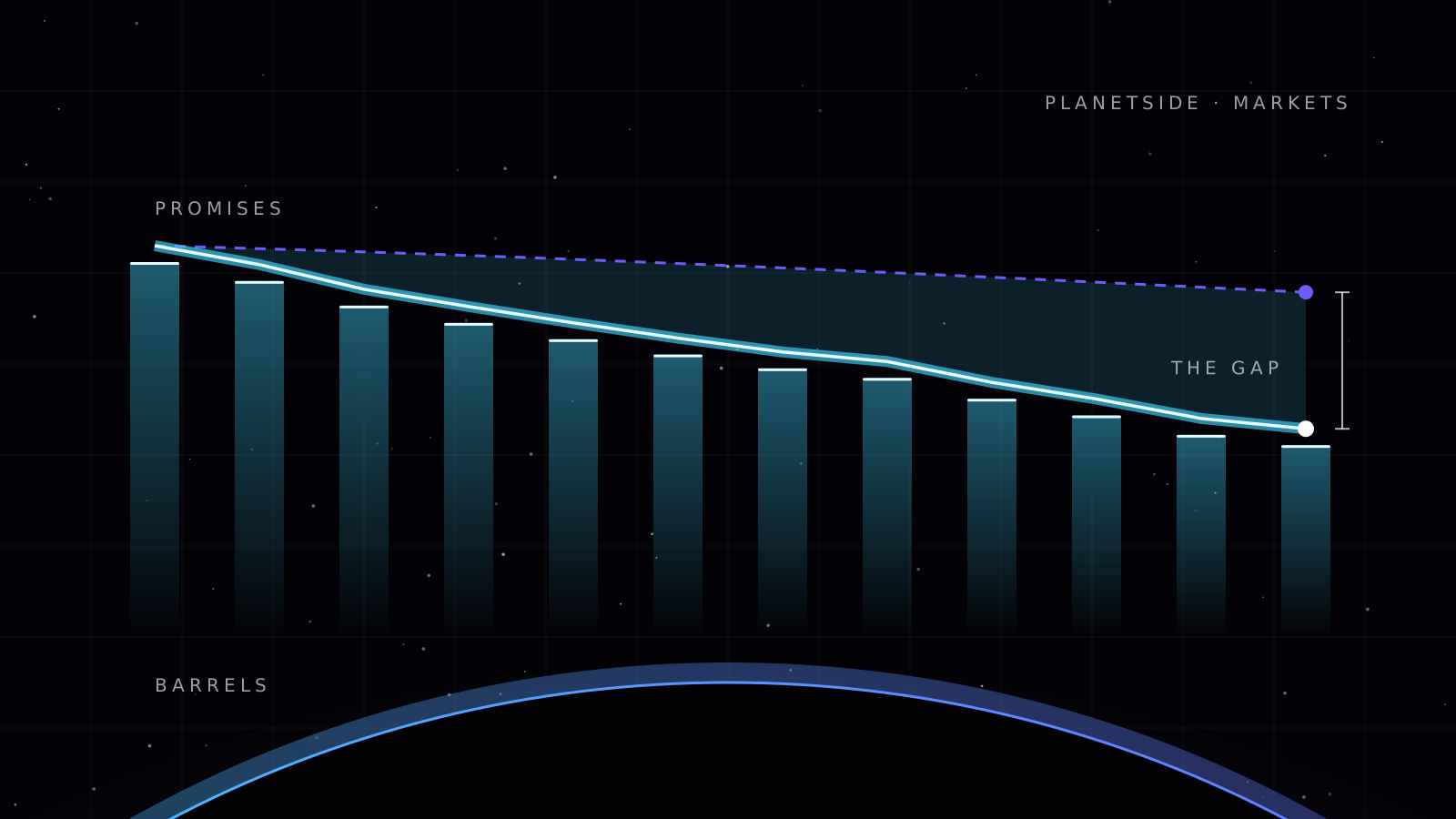
Earth runs two oil markets at once. One is made of barrels: tanks, tankers and refinery gates. The other is made of promises: futures contracts that settle on screens long before any crude moves. Those two markets are telling different stories, and the gap between them is where systemic risk tends to live.
The barrels say supply is tight. Commercial crude stocks (excluding strategic reserves) stood at 424.1 million barrels for the week ending October 2, 2026, down 3.2 million barrels on the week (EIA Weekly Petroleum Status Report, Table 1)1. Distillate stocks were 105.1 million barrels, 13.5% below the same week a year earlier. By the end of September, observed global inventories were 509 million barrels lower than at the end of February, with on-land stocks at their lowest since at least 2016 (IEA Oil Market Report, October 2026)2.
The promises look calmer. Official short-term outlooks still project prices easing as storage rebuilds. When physical supply and paper prices disagree, someone along the chain is holding a risk the other side has not priced.
Hypothesis: near-term barrels costing more than later ones is the market’s own signal of present scarcity; we treat the shape of the curve as an observation to re-check against exchange-primary settlements, not as a finished finding here.
What is reported, not confirmed: news outlets have described regulators examining oil-futures trades placed shortly before major policy announcements. No charges or findings have been announced. Large positions may be holding the paper price below what physical supply alone would support — that claim stays Hypothesis until a primary enforcement record says otherwise. This market has been gamed before; public CFTC court orders4 from the 2007 and 2008 cases record penalties of $14 million (2012) and $13 million (2014).
Hypothesis: if emergency stock releases end while on-land inventories sit near multi-year lows, there is little buffer left to absorb a surprise, and the paper price can be pulled toward the barrels. The counter-case is equally real: supply recovers, storage refills, and the gap closes quietly. For scale only, daily Brent spot peaked at $133.18 on March 8, 2022 (EIA RBRTE)3 — about $133, not a forecast.
Importing economies drain shared reserves to ease short-term pain. Producer blocs weigh near-term revenue against market share. The open question is whether the gap closes suddenly or slowly. The ledger will answer in barrels.
Sources (primary)
- 1EIA Weekly Petroleum Status Report, Table 1, week ending 10/2/2026 ↩
- 2IEA Oil Market Report, October 2026 ↩
- 3EIA RBRTE daily ($133.18 on 2022-03-08) ↩
- 4CFTC releases 5521-08 / 6239-12 ($14M, 2012); 6041-11 / 6971-14 ($13M, 2014) ↩
Not investment advice.